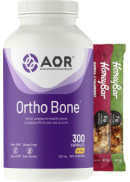
10 capsules contain:
- 1000mg
- Calcium (from bone meal [MCHA] complex)
- 455mg
- Phosphorus (from bone meal [MCHA] complex)
- 420mg
- Magnesium (from magnesium citrate, ascorbate)
- 1000IU
- Vitamin D3 (as vegan Cholecalciferol)
- 120 mcg
- Vitamin K2
- 60 mcg
- MK-4
- 60 mcg
- MK-7
- 700mcg
- Boron (from boron citrate)
- 11mg
- Zinc (from zinc citrate)
- 2.3mg
- Manganese (from manganese bisglycinate)
- 1mg
- Copper (from copper citrate)
- 35mg
- Silicon (HVP chelate from soy)
- 400mcg
- Folic acid (as calcium L-5-MTHF)
- 24mcg
- Vitamin B12 (as Methylcobalamin)
- 90mg
- Vitamin C (from magnesium ascorbate)
Non-medicinal Ingredients:
Microcrystaline cellulose, hydroxypropyl cellulose, tocopherols, acacia gum, starch (rice, corn &soy), sucrose, maltodextrin, tricalcium phosphate, sodium stearyl fumarate, silicon dioxide, medium chain triglycerides, citric acid, l-aspartic acid, glycine, sunflower oil and magnesium trisilicate. Capsule: hypromellose.
Microcrystaline cellulose, hydroxypropyl cellulose, tocopherols, acacia gum, starch (rice, corn &soy), sucrose, maltodextrin, tricalcium phosphate, sodium stearyl fumarate, silicon dioxide, medium chain triglycerides, citric acid, l-aspartic acid, glycine, sunflower oil and magnesium trisilicate. Capsule: hypromellose.
Important Information:
Contains no wheat, gluten, peanuts, sesame seeds, sulphites, mustard, dairy or eggs. Consult a health care practitioner prior to use if you are pregnant or breastfeeding or if you are taking blood thinners. Some people may experience diarrhea. This product contains corn and soy derived ingredients, do not use if you have such allergies.
Format
 Capsules
300 Caps
Dosage
Take up to 10 capsules daily with meals, or as directed by a qualified health care practitioner. Take a few hours before or after taking other medications.
Product Information:
- Excellent source of Calcium and other nutrients
- Supports bone health
- Helps prevent degenerative bone diseases
- Derived from Australian pasture-fed, free range livestock
- Features MCHC Calcium

Innovative Formulas by AOR Canada found at National Nutrition
AOR Canada is the innovative formulators of Canada’s best-selling antioxidant support, AOR Advanced B Complex and AOR Tri-B12. They are also known for their top bone health supplements, Ortho Adapt and Bone Basics. You can also SHOP AOR's Nattokinase, and trusted Curcumin Ultra, Curcumin Active and Curcumin95 inflammation support at National Nutrition.ca. AOR are leaders in natural health with innovative product development. Read more >What People Are Saying:
- Reviews
- POST A NEW REVIEW
Reviews for:
Ortho-Bone - 300 Caps + BONUS
(13 reviews)
Reviews By Rating
helpful votes
0
0 customers found this product review helpful
More Info
Ortho Boneis formulated with 13 key nutrients, which are all fundamental for mineral deposition in the bone matrix. The core bone building nutrients found in Ortho Bone include:
Ossein Microcrystalline Hydroxyapatite Complex (MCHC), by far the best calcium source available. This crushed bone powder contains all the nutrients normally present in bone in a calcium-based crystalline complex. MCHC is the only source of calcium shown to maintain or even increase bone density. All other sources of calcium can only, at the very best, halt bone loss.
Vitamin D is essential to bone health. The vitamin is the most important determinant for the absorption of calcium. Although skin exposure to sunlight leads to Vitamin D synthesis in the skin, sedentary lifestyles, northern latitudes and powerful sunscreens have left the majority of the North American population with discouragingly elevated rates of inadequate vitamin D status.
Vitamin K, especially menatetrenone, is another important nutrient for bone health. Research has shown that supplementation with this specific form of Vitamin K increases bone density at all sites and reduces bone fractures rates.
Boron reduces the urinary excretion of calcium and magnesium. Boron maintains blood calcium levels and appears to enhance the effects of vitamin D. Women fed boron-deficient diets experienced more calcium and magnesium loss whereas women on boron-supplemented diets excreted less calcium and magnesium.
Magnesium is essential for every major biological process. Two thirds of the body's magnesium is found in our bones. In women suffering from osteoporosis, reductions of magnesium in bone levels and serum levels have been reported. Studies have also demonstrated higher bone mineral density in women with higher dietary magnesium intakes. Magnesium depletion may prevent further bone growth and bone matrix with decreased magnesium content may be more brittle.
Several other key nutrients can play an important role for bone health. For instance, manganese, zinc, copper and silicon are important minerals with significant bone building attributes. Zinc is the most abundant intracellular trace element with several important biological functions but may be depleted by calcium supplementaion.
Osteoporosis
Osteoporosis is a silent painless disease in which bones become fragile and more likely to break. If not prevented or if left untreated, osteoporosis can progress painlessly until a bone breaks.
Women are four times more likely than men to develop the disease and often have a hard time getting all of the calcium they need to maintain strong bones. Three out of four get less than the recommended intake of 1200 mgs daily with the greater population getting less than half. At this rate, it's not uncommon for women to develop osteoporosis and to suffer fractures easily. And it's not only the lack of calcium in the diet that may be causing the disease, but lifestyle choices as well. Smoking and too much alcohol both weaken our bones, while the lack of weight-bearing exercise hinders the capability to build and maintain bone strength. Primary osteoporosis is a metabolic bone disease characterized by low bone mass and microarchitectural deterioration of bone tissue, leading to enhanced bone fragility and increased fracture risk. It is also characterized by an abnormal mineral/collagen ratio.
Primary osteoporosis represents bone mass loss unassociated with any other chronic illness. It is related to aging; loss of the gonadal function in females and the aging process in males.
Osteoporosis in men has recently been recognized as an important health problem, as almost 30% of all hip fractures and up to 20% of symptomatic vertebral fractures occur in men. Osteoporosis is insidious because you can't see or feel what's happening. Most people who have the disease don't know it, until a bone breaks. Though the obvious problems usually occur later in life, we now know that the invisible damage begins earlier - much earlier than most of us realize. A woman's estrogen levels can drop when she over-exercises or under-eats. One sign of low estrogen is missed periods and this can affect your bone density. Most young women have normal cycles and enjoy the natural protection of estrogen, which plays a vital role in bone health. But as our estrogen production slows, bone loss begins. Starting around age 35 we lose up to one percent of our bone mass each year. These losses accelerate rapidly after menopause.
Strong bones, or protection from osteoporosis, are not dependent upon calcium alone. While elemental calcium is essential, other minerals and nutrients, including protein and vitamins C, D3, B1 and K1 are needed to maintain and correct calcium levels and promote superior bone health.
Back to Top ↑