

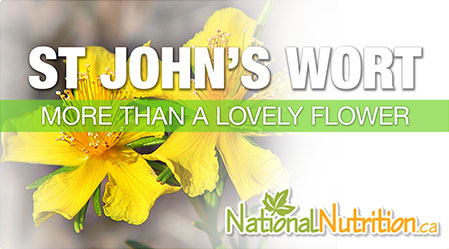
St. John's Wort is a safe & effective alternative for elevating mood
St John's Wort
Updated Feb. 17th, 2026 | Read Time: 2 Minutes | What You Will Learn:
- How Does St. John's Wort Work in The Body?
- St. John's Wort Supplement Options
- Important Information
- Nutritional Information
- Reader Comments (2)
St. John’s wort is one of the top-selling natural health products. It is also one of the most well-studied plants, with many scientific trials attesting to its efficacy as an infection fighter, anti-inflammatory, wound healer and anti-depressant. Its medicinal value has been attributed to a chemical called hypericin. Hypericin has shown to have anti-viral activity, including anti-HIV activity, by stimulating killer T cells.
How Does St. John's Wort Work in The Body?
T cells are immune cells that respond to viral infections. It inhibits the hormone cascade that results in inflammation, heals tissue and improves nerve conduction. As an antidepressant, hypericin increases the number of neurotransmitters in the brain, including serotonin. Serotonin is involved in the brain’s response to well-being, hunger, and many other sensations. Trials of St. John’s Wort versus prescription antidepressants have given clinical backing to the use of this herb for mild to moderate depression. This herb is recommended by natural health practitioners for a variety of other conditions including, internally, for viral infections and anxiety, and externally for wound healing, skin infections, nerve pain, bruises and muscle soreness.
St. John's Wort Supplement Options
This herb can be purchased as a loose herb, encapsulated herb, tablets, oil, extract or tincture. Internal preparations should be standardized to assure the consumer that the preparation will yield medicinal effects. St. John’s Wort's red coloured oil is used topically, although it stains so use it carefully. It can be rubbed into the affected area at full strength or diluted in a carrier oil (any food grade oil will do). This herb is found in formulas for infections, inflammation, stress, and depression.
Important Information
Do not use St. John’s wort in pregnancy. Internally, supplementation for 4-6 weeks is necessary to see results. May cause drowsiness or sun sensitivity. Not for use in severe depression. May cause increases in liver enzymes and should be used with caution by individuals with liver disease. Due to its activity in the liver, St. John’s wort can affect the levels of these medications: sedatives, photosensitizing drugs, antidepressants, MAO inhibitors, narcotics, analgesics, digoxin, HIV medication, anti-rejection medication and oral contraceptives. If you are taking medication, it is always best to consult a practitioner before taking this herb.















It's no wonder that St. John’s wort is one of the top selling natural health products and that there are so many forms of it available for purchase (loose herb, encapsulated herb, tablets, oil, extract, tincture...and I recall there is even a powder of it now too), being that it is among the most well-studied plants, with many scientific trials attesting to its efficacy in a myraid of spheres from fighting infections to battling inflammation and depression. I didn't know that St. John's Wort could even have anti-HIV activity: that is a rather remarkable effect!! Thank you for sharing this fascinating article with me!
Hello Rachel,
Glad you enjoyed learning more about St. John's Wort and thank you for sharing your existing knowledge of this herb. We're happy you've been enjoying our articles and deepening your learning of natural health!