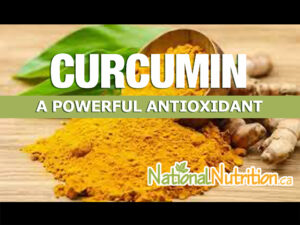
You're probably familiar with turmeric, that vibrant yellow spice with mega health benefits that are added to everything from curries to golden mylks and smoothies. Turmeric comes from the curcuma longa plant and has been used for thousands of years. Its use can be traced back to Vedic India, where it was used as a condiment, a healing remedy, and even as a textile dye.
In the last several years, you've likely read about how turmeric and its active ingredient, curcumin, can be used to help improve joint pain. One reason for this is curcumin's ability to act as an antioxidant.
What exactly does this mean? Read on to learn about why antioxidants are important and how the active ingredient from this curcuma longa species can provide health benefits.
Introduction to Antioxidants
While there is no fountain of youth out there, antioxidants come close. Antioxidants are compounds that help protect your body from free radicals. Free radicals are unstable molecules with an unpaired electrons. In their search for another electron, free radicals can cause damage to cells, leading to inflammation, premature aging, and disease. They're formed when you eat processed foods or cook with high heat. They also come from outside sources, like pollution in the air. But luckily, antioxidant molecules have an extra electron that they can donate to these unstable free radicals.
In general, antioxidants can be either fat-soluble or water-soluble. The antioxidants found in supplements from the curcuma longa species are fat-soluble, which means that it must be taken with a fat source to enhance bioavailability (we'll get to that in a minute).
Curcumin: More About Its Active Ingredient
Turmeric from the curcuma longa species has been used for centuries in traditional medicine to treat pain and inflammation (like arthritis). It contains anti-inflammatory properties that can help reduce swelling, stiffness, redness, and heat associated with arthritis symptoms. Interestingly, in countries like India and China, where a lot of turmeric has traditionally been consumed, there are lower incidences of disease.
In recent years, researchers have been able to isolate and study the active compounds found in the curcuma longa plant. Curcumin is the most "active" compound found in turmeric. And it's the reason for turmeric's beautiful golden colour. If colour gives any clue to benefits, you can tell that you will get many benefits from consuming curcumin. Read on to learn how curcumin acts as an antioxidant in your body.
- Neutralizing free radicals: As mentioned, free radicals are unstable molecules with an unpaired electron. They can be present in your body as a result of the food you eat, chemicals you're exposed to (including pesticides), and even stress. Unfortunately, prolonged free-radical attacks can accelerate the physical signs of aging. But because curcumin molecules contain an extra electron, they can neutralize free radical damage.
- Combating oxidative stress: Oxidative stress is the process that occurs when the body is exposed to too many free radicals. Interestingly, chronic pain is believed to be due in part to oxidative stress. Curcumin works by neutralizing these free radicals and preventing oxidative stress from occurring. One review of scientific research found that curcumin was able to neutralize oxidative stress by helping the body remove reactive oxygen and nitrogen, as well as removing heavy metals. Also, because it can regulate certain enzymes in the body, curcumin can help reduce oxidative stress.
- Stimulating the production of glutathione: Glutathione is a sulfur-based molecule made of cysteine, glycine, and glutamic acid. It is an important antioxidant that helps detoxify the body by neutralizing harmful free radicals. You may also be interested to learn that glutathione production slows as you age, making it even more important to supplement with curcumin.
If you are wondering whether curcumin may be for you, here are some situations that could benefit from this ingredient:
- If you experience joint pain
- If you suffer from an inflammatory condition
- If you want to support healthy aging
- If you want to support a healthy brain (including mood and cognition)
- If you have an active injury
- If you are healing from surgery
How To Take This Supplement
Curcumin is a fat-soluble substance. Our ability to absorb it is low. Health experts have questioned its ability to reach the bloodstream, where it does its therapeutic work.
Traditionally, curcumin supplements have been combined with black pepper (including a substance found in black pepper called piperine) to enhance absorption. Some supplement manufacturers have also used fermented turmeric to enhance absorption.
Recently, supplement companies have developed new formulations, including liposomal curcumin and curcumin nanoparticles, to make the curcumin more readily absorbed into our cells.
A good dose of curcumin is 500–1000 mg, standardized to 95% curcuminoids.
Curcumin FAQs
Are curcuma longa, curcumin and turmeric the same thing?
Curcuma longa is the plant/root in which turmeric comes from. Curcumin is the active ingredient in turmeric. Curcumin is a major component of turmeric and gives it its yellow colour.
Can curcumin help with weight loss?
Curcumin may help with weight loss by reducing inflammation. Studies show that it may reduce adipogenesis (the process of forming fat cells) in mice and rats. However, this is animal research and more studies are needed to see if the same benefit will occur in humans.
Are curcumin supplements safe?
Yes, curcumin supplements are safe. Studies show that it is well-tolerated and has a low risk for side effects and fun fact, it comes from a flowering plant called curcuma longa that is also apart of the ginger family!
References
https://www.ncbi.nlm.nih.gov/pmc/articles/PMC7694612
https://www.ncbi.nlm.nih.gov/books/NBK92752
https://pubmed.ncbi.nlm.nih.gov/15650394/