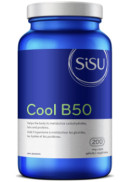
Each capsule contains:
- 50mg
- Vitamin B1 (thiamine mononitrate)
- 50mg
- Vitamin B2 (riboflavin)
- 50mg
- Vitamin B3 (niacinamide)
- 50mg
- Vitamin B6 (pyridoxine hydrochloride)
- 50mcg
- Vitamin B12 (cyanocobalamin)
- 50mg
- Pantothenic Acid (calcium-d-pantothenate)
- 400mcg
- Folate (folic acid)
- 50mcg
- Biotin
- 50mg
- Inositol
- 21mg
- Choline (choline bitartrate)
Non-Medicinal Ingredients:
Fruit and Vegetable Blend (acerola, alfalfa, kelp, parsley, rose hip, watercress), Magnesium Stearate (vegetable), Silicon Dioxide, Microcrystalline Cellulose, Dicalcium Phosphate, D-mannitol
Fruit and Vegetable Blend (acerola, alfalfa, kelp, parsley, rose hip, watercress), Magnesium Stearate (vegetable), Silicon Dioxide, Microcrystalline Cellulose, Dicalcium Phosphate, D-mannitol
Important Information:
Contains no dairy, yeast, wheat, gluten, soy or preservatives.
Format
 Capsules
200 Caps
Dosage
Take 1 capsule daily with food or as directed by a health care practitioner
Product Information:
- Ideal for high stress lifestyles
- Complete with all the B vitamins + Lipotropic factors
- Promotes energy, healthy nervous system and metabolic functions
- Blended with non-flushing niacin
- Easy to swallow capsule

Sisu, formulators of top-quality, top-selling immune supplement, Ester-C, bone health supplement, Cal Mag Citrate and popular natural health supplements Biotin and CoQ10. Sisu vitamins are therapeutic strength, made from pure raw materials and undergo strict quality testing that exceeds Canadian regulatory requirements. You can buy Sisu supplements right here, at National Nutrition.ca Read more >
What Customers Are Saying:
- Reviews
- POST A NEW REVIEW
More Info
What are B Vitamins?
B vitamins are a complex of water-soluble vitamins. They are called "B Complex" because you do not find any one of them in a specific food or living tissue without the others being present. B vitamins complement each other. They are responsible mainly for the health and maintenance of nerves, eyes, digestion and skin, as well as the processing of carbohydrates, fat and protein, growth, the production of hormones and digestive enzymes, prevention of anaemia, maintenance of the sex glands, sebaceous glands and bone marrow.
Because of their solubility they cannot be stored in the body, so whatever is not utilized is rapidly excreted. However, a certain balance is advisable making a B Complex supplement ideal rather than taking large amounts of just one or two B vitamins. The B-complex vitamins are a group of similarly structured compounds, which is why they are referred to as a "Complex" vitamin. This complex of vitamins consists of B1 (thiamine HCL), B2 (riboflavin 5-phosphate and riboflavin HCL), B3 flush free (inositol hexanicotinate) and Niacinamide, B5 (D-pantothenic acid, calcium), B6 (pyridoxal 5-phosphate and pyridoxine HCL) and, B7 (biotin), B12 (cyanocobalamine), and folic acid.
B Vitamins & Stress
Many people today do not realize that stress and anxiety are often the result of acute deficiency of B vitamins. Combined with environmental toxins and daily routine, stress levels can be avoided with adequate supplementation of B vitamins.What the body does not use is eliminated in urine, which means a continuous supply is required. The key is to comprehend the role of B vitamins and the prevention of stress. A deficiency of B vitamins causes over-tiredness and anxiety that can increase stress levels. Complexes of B vitamins play essential roles and are responsible for producing energy for your body.
Why do I Need B Vitamins?
The Nutrition Almanac states that B vitamins "may be the single most important factor for maintenance of the nerves."B vitamins are essential for healthy skin, hair, eyes, mouth and liver. Water-soluble B vitamins are not stored in the body and must be replenished daily.
All of the B vitamins work together and are best used by the body in a B complex, which is why many B complex supplements include a small dose of riboflavin in them. If additional supplementation of riboflavin is needed it should be taken in addition to a good B complex. Most B vitamins are water-soluble and any extra from large doses is flushed out of the body easily, therefore it's best to take lower dosages of the B complex several times a day than one larger dose. Spray or sublingual forms of B vitamins are easily absorbed, as are capsules - if your digestion is healthy, then the tablet form is usually suitable for most people.
The B Complex Family
All of the B vitamins work together and are best used by the body in a B complex. Most B vitamins are water-soluble and any extra from large doses is flushed out of the body easily, therefore it's best to take lower dosages of the B complex several times a day than one larger dose. Spray or sublingual forms of B vitamins are easily absorbed, as are capsules - if your digestion is healthy, then the tablet form is usually suitable for most people.
Vitamin B1 (Thiamine)-Thiamine is a water-soluble B vitamin. It is a cofactor in many chemical reactions in the body. Thiamine enhances the circulation of blood to the brain and maintains the function of nerve cells, thus optimizing brain function and learning capacity. Thiamine also forms the blood cells and stomach acid. It helps to regulate muscle activity and ensures proper tone of the digestive tract and heart. Energy, growth and normal appetite all depend on thiamine availability.
Vitamin B2 (Riboflavin)- All of our cells need B2 for cellular respiration and growth because it is a part of the flavin coenzymes. These coenzymes speed up the chemical reactions in the body that are directly responsible for making energy. Riboflavin also helps the body to digest fats, carbohydrates and proteins. It is an important vitamin for the formation of blood cells, to prevent anemia, and antibodies, to ensure the proper functioning of the immune system.
Vitamin B3 (Niacin)- It is an important vitamin for the functioning of the nervous system. Niacin has been well researched for its ability to improve mental illnesses such as schizophrenia. It also helps the digestion of fats, carbohydrates and protein because niacin is needed in the coenzymes that speed up these reactions. Niacin plays a part in the production of stomach acid and bile. One form of B3, niacin, lowers cholesterol because niacin is involved in chemical reactions that metabolize fats. Niacin also causes the release of histamine, a chemical responsible for dilating vessels. Thus it benefits cardiovascular diseases, where circulation is compromised, and diabetes, where decreased circulation causes numbness in the extremities. To further help with diabetes, niacin regulates blood sugar as a component of glucose tolerance factor.
Vitamin B5 (Pantothenic Acid)- B5 is known as the anti-stress vitamin and most people in today's society can benefit from its supplementation. It supports the adrenal gland, where it aids in the production of hormones that help the body respond to stress, and the brain, where it produces neurotransmitters that are depleted in stressful situations. It also forms antibodies, for proper functioning of the immune system, and aids in the processing of vitamins, fats, carbohydrates and proteins during digestion. All of these functions increase the body's energy production. Pantothenic acid can be used to treat anemia, depression, anxiety and fatigue.
Vitamin B6 (Pyridoxine)- There are several forms of B6 including pyridoxine, pyridoxal and pyridoxamine. B6 is involved in more body functions than any other single nutrient. It maintains fluid balance in the body, which can be useful for women who experience PMS bloating or individuals with carpal tunnel syndrome. B6 helps to make hemoglobin, the oxygen- carrying component of red blood cells. It is needed to synthesize genetic material and is essential for normal cellular growth. B6 is required for the production of neurochemicals in the brain, such as serotonin, which regulates pleasurable experiences and appetite, and GABA, which calms the body. Therefore, B6 is useful for a variety of neurological disorders including autism and hormonally related depression. It plays an important role in the conversion of homocysteine into harmless substances. Homocysteine damages the inner lining of arteries and high levels of homocysteine are correlated to an increased risk of atherosclerosis. B6 can be used to treat anemia, allergies, arthritis, asthma, kidney stones, pregnancy-related nausea and MS.
Vitamin B12- There are several forms of B12 including cyanocobalamin and methylcobalamin. B12 is required in areas where there is high cell turnover, for example the gastrointestinal tract, bone marrow and nervous system. Thus B12 has been used for the treatment of neurological diseases like multiple sclerosis and depression.
B12 regulates blood cell production, with folic acid. Lack of B12 leads to types of anemia where the red blood cells look too large, macrocytic, under the microscope. Supplementing sublingually with B12 reverses this type of anemia. B12 is required for digestion, fertility and the normal growth and development of all cells. It enhances learning and memory, and normalizes sleep patterns.
Co-Factors
Biotin- Biotin is most well known for its promotion of healthy hair and skin. Cradle cap in infants and male pattern baldness may be related to low levels of biotin. Biotin also helps the functioning of the sweat glands, bone marrow and nerve tissue.
Folic Acid -It is also known as folate and folacin. This vitamin is needed for energy production, cell replication and the formation of red and white blood cells. It plays an important role in the conversion of homocysteine into harmless substances.
Paba- Its most important functions are related to the use of folic acid and B5, pantothenic acid, by the body. As an antioxidant PABA protects the cell from damage and prevents the oxidation of other vitamins and nutrients. It does this by neutralizing free radicals. PABA protects the body from sunburn, second hand smoke, ozone and other air pollutants. It is used to increase flexibility and decrease inflammation in arthritis sufferers. It has been reported to reverse the greying of hair due to stress or poor nutrition.
Lipotropics
Inositol- It is known as a fat emulsifier (lipotropic) and it works well with choline. Inositol helps to regulate both fat metabolism (both the good and bad) & cholesterol metabolism in the liver and gallbladder, breaking them down into smaller particles, which makes it easier for your body reduce their accumulation. It also reduces fatty build-up in organs like the liver. Inositol is important for healthy hair growth. It also has a calming effect on the mind by helping to produce brain chemicals (neurotransmitters) like acetylcholine. It is used in the treatment of depression, obsessive-compulsive disorder, anxiety, arteriosclerosis and eczema.
Choline -Best known as a fat emulsifier (lipotropic), it works well with inositol and is one of the few substances that can cross the bCholine also helps to regulate fat metabolism (both the good and bad) & cholesterol metabolism in the liver and gallbladder, breaking them down into smaller particles which makes it easier for your body reduce their accumulationlood-brain barrier to produce brain chemicals (neurotransmitters) that aid in memory in particular acetylcholine. Choline is also needed for the insulation of nerve cells.
B vitamins are a complex of water-soluble vitamins. They are called "B Complex" because you do not find any one of them in a specific food or living tissue without the others being present. B vitamins complement each other. They are responsible mainly for the health and maintenance of nerves, eyes, digestion and skin, as well as the processing of carbohydrates, fat and protein, growth, the production of hormones and digestive enzymes, prevention of anaemia, maintenance of the sex glands, sebaceous glands and bone marrow.
Because of their solubility they cannot be stored in the body, so whatever is not utilized is rapidly excreted. However, a certain balance is advisable making a B Complex supplement ideal rather than taking large amounts of just one or two B vitamins. The B-complex vitamins are a group of similarly structured compounds, which is why they are referred to as a "Complex" vitamin. This complex of vitamins consists of B1 (thiamine HCL), B2 (riboflavin 5-phosphate and riboflavin HCL), B3 flush free (inositol hexanicotinate) and Niacinamide, B5 (D-pantothenic acid, calcium), B6 (pyridoxal 5-phosphate and pyridoxine HCL) and, B7 (biotin), B12 (cyanocobalamine), and folic acid.
B Vitamins & Stress
Many people today do not realize that stress and anxiety are often the result of acute deficiency of B vitamins. Combined with environmental toxins and daily routine, stress levels can be avoided with adequate supplementation of B vitamins.What the body does not use is eliminated in urine, which means a continuous supply is required. The key is to comprehend the role of B vitamins and the prevention of stress. A deficiency of B vitamins causes over-tiredness and anxiety that can increase stress levels. Complexes of B vitamins play essential roles and are responsible for producing energy for your body.
Why do I Need B Vitamins?
The Nutrition Almanac states that B vitamins "may be the single most important factor for maintenance of the nerves."B vitamins are essential for healthy skin, hair, eyes, mouth and liver. Water-soluble B vitamins are not stored in the body and must be replenished daily.
All of the B vitamins work together and are best used by the body in a B complex, which is why many B complex supplements include a small dose of riboflavin in them. If additional supplementation of riboflavin is needed it should be taken in addition to a good B complex. Most B vitamins are water-soluble and any extra from large doses is flushed out of the body easily, therefore it's best to take lower dosages of the B complex several times a day than one larger dose. Spray or sublingual forms of B vitamins are easily absorbed, as are capsules - if your digestion is healthy, then the tablet form is usually suitable for most people.
The B Complex Family
All of the B vitamins work together and are best used by the body in a B complex. Most B vitamins are water-soluble and any extra from large doses is flushed out of the body easily, therefore it's best to take lower dosages of the B complex several times a day than one larger dose. Spray or sublingual forms of B vitamins are easily absorbed, as are capsules - if your digestion is healthy, then the tablet form is usually suitable for most people.
Vitamin B1 (Thiamine)-Thiamine is a water-soluble B vitamin. It is a cofactor in many chemical reactions in the body. Thiamine enhances the circulation of blood to the brain and maintains the function of nerve cells, thus optimizing brain function and learning capacity. Thiamine also forms the blood cells and stomach acid. It helps to regulate muscle activity and ensures proper tone of the digestive tract and heart. Energy, growth and normal appetite all depend on thiamine availability.
Vitamin B2 (Riboflavin)- All of our cells need B2 for cellular respiration and growth because it is a part of the flavin coenzymes. These coenzymes speed up the chemical reactions in the body that are directly responsible for making energy. Riboflavin also helps the body to digest fats, carbohydrates and proteins. It is an important vitamin for the formation of blood cells, to prevent anemia, and antibodies, to ensure the proper functioning of the immune system.
Vitamin B3 (Niacin)- It is an important vitamin for the functioning of the nervous system. Niacin has been well researched for its ability to improve mental illnesses such as schizophrenia. It also helps the digestion of fats, carbohydrates and protein because niacin is needed in the coenzymes that speed up these reactions. Niacin plays a part in the production of stomach acid and bile. One form of B3, niacin, lowers cholesterol because niacin is involved in chemical reactions that metabolize fats. Niacin also causes the release of histamine, a chemical responsible for dilating vessels. Thus it benefits cardiovascular diseases, where circulation is compromised, and diabetes, where decreased circulation causes numbness in the extremities. To further help with diabetes, niacin regulates blood sugar as a component of glucose tolerance factor.
Vitamin B5 (Pantothenic Acid)- B5 is known as the anti-stress vitamin and most people in today's society can benefit from its supplementation. It supports the adrenal gland, where it aids in the production of hormones that help the body respond to stress, and the brain, where it produces neurotransmitters that are depleted in stressful situations. It also forms antibodies, for proper functioning of the immune system, and aids in the processing of vitamins, fats, carbohydrates and proteins during digestion. All of these functions increase the body's energy production. Pantothenic acid can be used to treat anemia, depression, anxiety and fatigue.
Vitamin B6 (Pyridoxine)- There are several forms of B6 including pyridoxine, pyridoxal and pyridoxamine. B6 is involved in more body functions than any other single nutrient. It maintains fluid balance in the body, which can be useful for women who experience PMS bloating or individuals with carpal tunnel syndrome. B6 helps to make hemoglobin, the oxygen- carrying component of red blood cells. It is needed to synthesize genetic material and is essential for normal cellular growth. B6 is required for the production of neurochemicals in the brain, such as serotonin, which regulates pleasurable experiences and appetite, and GABA, which calms the body. Therefore, B6 is useful for a variety of neurological disorders including autism and hormonally related depression. It plays an important role in the conversion of homocysteine into harmless substances. Homocysteine damages the inner lining of arteries and high levels of homocysteine are correlated to an increased risk of atherosclerosis. B6 can be used to treat anemia, allergies, arthritis, asthma, kidney stones, pregnancy-related nausea and MS.
Vitamin B12- There are several forms of B12 including cyanocobalamin and methylcobalamin. B12 is required in areas where there is high cell turnover, for example the gastrointestinal tract, bone marrow and nervous system. Thus B12 has been used for the treatment of neurological diseases like multiple sclerosis and depression.
B12 regulates blood cell production, with folic acid. Lack of B12 leads to types of anemia where the red blood cells look too large, macrocytic, under the microscope. Supplementing sublingually with B12 reverses this type of anemia. B12 is required for digestion, fertility and the normal growth and development of all cells. It enhances learning and memory, and normalizes sleep patterns.
Co-Factors
Biotin- Biotin is most well known for its promotion of healthy hair and skin. Cradle cap in infants and male pattern baldness may be related to low levels of biotin. Biotin also helps the functioning of the sweat glands, bone marrow and nerve tissue.
Folic Acid -It is also known as folate and folacin. This vitamin is needed for energy production, cell replication and the formation of red and white blood cells. It plays an important role in the conversion of homocysteine into harmless substances.
Paba- Its most important functions are related to the use of folic acid and B5, pantothenic acid, by the body. As an antioxidant PABA protects the cell from damage and prevents the oxidation of other vitamins and nutrients. It does this by neutralizing free radicals. PABA protects the body from sunburn, second hand smoke, ozone and other air pollutants. It is used to increase flexibility and decrease inflammation in arthritis sufferers. It has been reported to reverse the greying of hair due to stress or poor nutrition.
Lipotropics
Inositol- It is known as a fat emulsifier (lipotropic) and it works well with choline. Inositol helps to regulate both fat metabolism (both the good and bad) & cholesterol metabolism in the liver and gallbladder, breaking them down into smaller particles, which makes it easier for your body reduce their accumulation. It also reduces fatty build-up in organs like the liver. Inositol is important for healthy hair growth. It also has a calming effect on the mind by helping to produce brain chemicals (neurotransmitters) like acetylcholine. It is used in the treatment of depression, obsessive-compulsive disorder, anxiety, arteriosclerosis and eczema.
Choline -Best known as a fat emulsifier (lipotropic), it works well with inositol and is one of the few substances that can cross the bCholine also helps to regulate fat metabolism (both the good and bad) & cholesterol metabolism in the liver and gallbladder, breaking them down into smaller particles which makes it easier for your body reduce their accumulationlood-brain barrier to produce brain chemicals (neurotransmitters) that aid in memory in particular acetylcholine. Choline is also needed for the insulation of nerve cells.
Back to Top ↑