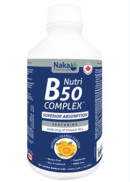
- 50mg
- Vitamin B1 (Thiamine hydrochloride)
- 50mg
- Vitamin B2 (Riboflavin)
- 50mg
- Vitamin B3 (Niacinamide)
- 100mg
- Vitamin B5 (Pantothenic acid) (Calcium D-pantothenate)
- 50mg
- Vitamin B6 (Pyridoxine hydrochloride)
- 1000mcg
- Vitamin B12 (Methylcobalamin)
- 1000mcg
- Folic acid (Folate)
- 75mcg
- Biotin
- 50mg
- Choline (Choline dihydrogen citrate)
- 50mg
- Inositol
Keep out of reach of pets & children. Sealed fo you protection. Do not use if seal is broken or missing. Keep out of reach of children. Shake well before each use. Refrigerate after opening. Contains no added gluten, nuts, eggs, fish or shellfish, animal products, dairy, corn, soy, starch, wheat or yeast. This is a product with natural components. Therefore, slight variations in the colour and taste are normal and do not affect the quality of the product.
 Liquid
600ml
Adults: Take 15ml daily. Take with food. Use the calibrated measuring cup provided to obtain an accurate dosage. Do not drink directly from the bottle.
- Superior absorption
- Contains 1000MCG of Vitamin B 12 Methylcobalamin
- Natural Orange flavour
- Gluten Free
- Non Irradiated
- GMO Free
- Vegetarian

Premium Quality & Canadian Made - 12 New Added
Founded in 1991, Naka’s success has been built upon introducing innovative supplements in liquid or easy-to-swallow capsule forms designed to meet the better health needs of consumers worldwide. Their most popular supplements include: Naka Pro Collagen, Naka Vital Greens, Naka Magnesium Bisglycinate, Naka Nutri Flex, Naka Vital Greens and Naka Probiotics.You can find Naka herbs and buy Naka supplements at NationalNutrition.ca Read more >- Reviews
- POST A NEW REVIEW
Reviews By Rating
helpful votes
1
1 customers found this product review helpful
Vitamin B
B vitamins are a group of water soluble nutrients that play a vital role in cellular metabolism and are dispersed throughout the body...
B vitamins need to be replenished on a regular basis, as excesses are excreted in the urine. The rest of the B vitamin family can be found in whole grains, legumes and lentils, nutritional yeast, meat, eggs (egg yolk), liver, cheese, fish, spinach and other leafy greens, to name just a few sources.
B vitamins work best when used in combination with each other, as in a B complex supplement. It is best to take B complex supplements (usually found in 50-100 mg/capsule dosages) in divided dosages throughout the day, as opposed to all at once.
This avoids excess being lost in urine. Individuals who suffer from impaired digestion (elderly) or inflammation of the digestive tract, such as IBD, are at a higher risk of being deficient in B vitamins. Many B vitamins are available in sublingual forms for better absorption, or can be taken via intramuscular injection (IM), to bypass the digestive system, as well as allow for higher dosing.
B1
Thiamine is synthesized by bacteria, fungus and plants and therefore animals must obtain via diet. Thiamine is known to enhance blood circulation to the brain and nerve cells. Severe deficiency of thiamine can result in what is known as Beri Beri, a disease characterized by severe deficiencies in the peripheral nervous system (neuritis), as well as cardiovascular deficiency. Beri Beri can be fatal if not addressed. Thaimine also regulates muscle activity, ensuring proper tone of the digestive tract and heart. It is also a potent antioxidant. It aids in the formation of blood cells, as well as stomach acid (for proper digestion). Less severe thiamine deficiency can lead to weight loss, irritability, confusion and general malaise. Thiamine levels are depleted by heavy alcohol consumption, as well as heavy caffeine and sugar intake. Antibiotics, sulfa drugs, oral contraceptives and anti-seizure medications, such as dilantin, can also deplete thiamine levels.
B2
Riboflavin plays an integral role in cellular respiration and growth. "Flavins" are enzymes that speed up chemical reactions that are responsible for energy production in the body. Riboflavin, like many of the B vitamins plays an important role in supporting the body in its digestion of fats, carbohydrates and proteins. It also joins thiamine in supporting the formation of blood cells. Riboflavin plays an essential part of the immune response in that it supports the formation of antibodies. It has been effectively used for muscle pain relief, as well as in migraine relief (often in combination with magnesium and CoQ10). Riboflavin is the only vitamin that can colour urine, as it is responsible for the bright yellow colour that many notice after ingestion of a multi or B complex vitamin. Signs of Riboflavin deficiency include angular cheilitis (cracks at the corners of the mouth), photophobia, mouth ulcers and inflammation of the tongue and mucosal membranes of the mouth, as well as scrotal dermatitis in men. Many individuals low in riboflavin will first notice deficiencies in growth of hair and nails. Carpal tunnel like symptoms may also be observed. Riboflavin is necessary for the prevention of birth defects in the developing fetus and therefore included in all prenatal vitamin combinations. Riboflavin is very easily destroyed by light and is easily degraded in clear containers (think clear plastic milk bags). High dosages of Riboflavin may interfere with the action of some cellular medications.
B3
Niacin, or B3 is one of the better known and studied B vitamins, primarily for its use in cardiovascular disease, namely lowering cholesterol levels, as well as its support of the nervous system. Niacin has been used in higher dosages to treat a variety of mental illness, including schizophrenia. The body can produce Niacin from Tryptophan (in the diet), along with the help of B1, B2 and B6. Niacin causes the release of histamine, which then dilates blood vessels, helpful for those with compromised circulation, as in cardiovascular disease and diabetes. It also has a separate effect of helping to regulate blood sugar. Niacin plays a role in the formation of bile salts and stomach acid, also allowing it to aid in the digestion of carbohydrates, protein and fats. Being so integrally involved in the chemical reactions that metabolize fats in the body is what makes niacin so effective in lowering cholesterol levels. Niacin causes what is known as a flush in many individuals, characterized by . Taking niacin on a full stomach and slowly increasing the dosage, are two methods of reducing its flushing action. Nicotinomide, (Niacinamide) often used interchangeably with niacin, does not have the same pharmacological effects as niacin. It does not cause flushing, but it also has very little to no effect on cholesterol levels and can be very toxic to the liver in dosages above 400-500 mg/day. It is often marketed as time released niacin. Inositol hexanicotinate (IHN) is inositol that has been esterfied to niacin and is also non-flushing. Research is mixed when it comes to using IHN to treat dyslipidemia, however. Sulfa drugs, estrogen replacement therapy, alcohol and sleeping pills can all interfere with niacin levels in the body. Antiobiotics are known to worsen the flushing effect of niacin. When taking high doses of any form of niacin (>500 mg/day) liver function tests should be performed by your healthcare professional on a regular basis.
B5
Pantothenic Acid, or B5 is often referred to as the stress vitamin. B5 can actually be produced by the body via 'good' or 'healthy' gut bacteria. Due to an excess of stress or depletion of these healthy bacteria in the gut, both very common, supplementation is often necessary. B5 is also destroyed by heating and food processing methods, which limits the amount we can get through food sources. Pantothenic acid is known to support the adrenal glands, and aid in the production of adrenal hormones, including cortisol. It also supports the nervous system or brain, and its production of neurotransmitters, also commonly depleted in times of stress. Similar to some of the other B vitamin clan, pantothenic acid helps to support the proper functioning of the immune system by playing a large role in the formation of antibodies. It also aids in the digestion of fats, carbohydrates and proteins. Another form of B5, Pantethine, is the only form shown to regulate cholesterol levels, lowering LDL cholesterol, while supporting increases in HDL cholesterol, which we want high. This effect is especially seen in diabetic patients. B5 levels can be depleted through the use of sulfa drugs, caffeine, sleeping pills, estrogen replacement therapies and alcohol.
B6
B6 is involved in more processes in the body than any other one single nutrient. There are 6 different forms of B6, including the most active form, pyridoxal 5 phosphate (P5P). The liver is the site of B6 metabolism. B6 plays a huge role in amino acid metabolism, as well as gluconeogenesis, the production of glucose from glycogen in the liver, as well as metabolism of fats and carbohydrates. B6 also plays a large part in neurotransmitter synthesis, as well as the synthesis of histamine and hemoglobin. It is required for the production of such neurotransmitters/neurochemicals as serotonin and GABA, which can have a calming effec on the body. This explains its effectiveness in neurological disorders like Autism, as well as hormonally related depression and nausea (in PMS and pregnancy). B6, along with folic acid and B12 all play a role in lowering homocysteine levels in the body, thought to be responsible in part for an increase in atherosclerosis in some individuals. The classic clinical signs of B6 deficiency include neurological symptoms, including somnolence, confusion, and neuropathy, intertrigo, sebborheic dermatitis-like eruptions and angular cheilitis. A deficiency of B6 alone is rare, and often occurs in combination with other B vitamins. The elderly and alcoholics have an increased risk of B6 deficiency.
B7
Biotin is also known as vitamin H, or Coenzyme R, is necessary for cellular growth, metabolism of fats and amino acids. Biotin has been shown to be effective in improving blood sugar control and decreasing fasting blood sugar in both type I and type II diabetics. It has also been shown to prevent and treat neuropathy associated with diabetes. Biotin also supports healthy nails and hair, although there is no evidence to suggest it absorbed topically/externally for these purposes. It has been used to effectively treat seborrheic dermatitis (cradle cap) in childhood. Biotin deficiency, although rare and mild, can be caused by daily consumption of raw egg white containing avidin which is known to bind biotin. Supplementation can correct deficiencies. Symptoms of biotin deficiency include dermatitis, conjunctivitis, hair loss, and numbness and/or tingling of the extremities. Decreased immune system function can also result from low biotin. Pregnancy can cause high risk of biotin deficiency, which in turn can cause serious consequences in both childhood and during fetal developement, including malnourishment and congenital malformations.
B9
Folic Acid is necessary for the synthesis and repair of DNA. It is especially important in rapid cell division and growth, making it vital in both pregnancy and infancy. Folic acid supplementation both right before and right after a woman becomes pregnant can prevent congenital malformations, including neural tube defects. It may also reduce the risk of preterm delivery, low infant birth weight, placental abruption and pre-eclampsia. Folic acid is also essential for the production of red blood cells, and therefore the prevention of anemia. It has also been shown to reduce the risk of stroke. Diets highi n folate have also been associated with decrease incidence of colorectal cell growths, as well. Tehre is also research to suggest that folic acid may help to support individuals with depression, when used in combination with pharmaceutical anti-depressants. Folic acid must be converted into tetrahydrafolate in order to have these therapeutic effects in the body. Some of the more common symptoms of folate deficiency include diarrhea, weakness or shortness of breath, weakness or numbness in the limbs/extremities, confusion, forgetfulness and other cognitive decline, headaches, heart palpitations and irritability or behavioural disorders. Folic acid is depleted with the use of oral contraceptives, as well as high alcohol consumption. High folate levels can mask the symptoms of B12 deficiency anemia. This is of special concern for individuals over the age of 50, who are at a greater risk of B12 deficiency.
B12
Cobalamin is available in 3 common forms, methycobalamin, hydroxycobalamin and cyanocobalamin. Methylcobalamin has a better bioavilability (easier for the body to use) than the cyanocobalamin form of B12. Hydroxycobalamin is thought to fall somewhere in the middle. The body can store up to a five year supply of vitamin B12, meaning deficiencies can be hidden for several years. B12 is especially important in areas such as the gastrointestinal tract, the nervous system and bone marrow, primarily where there is high cell turnover. B12, along with folic acid, regulates blood cell production and plays a huge role in the prevention of anemia. B12 deficiency leads to a type of anemia called macrocytic anemia, in which the red blood cells are too large. B12 is required for digestion, fertility and the normal growth and development of all cells. It enhances learning and memory and normalizes sleep patterns. High levels of B12 in the elderly may help protect against the development of brain atrophy associated with Alzheimer's disease. Deficiency of intrinsic factor in the stomach results in an inability to absorb B12. Sublingual supplementation of B12 eliminates the need for intrinsic factor. B12 is also often administered IM. There are a variety of commonly used medications that can interfere with B12 levels in the body. Antibiotics, oral contraceptives, metformin, gout and anti-coagulant medications, H2 blockers, sedatives, proton pump inhibitors can all interfere with and reduce B12 absorption. Alcohol and nicotine, as well as potassium supplementation can also deplete B12 levels. B12 cannot be found in plant sources, making supplementation important for those following a vegan diet.
Back to Top ↑